City life
Choose a rail-connected neighbourhood for city exploring, with river journeys and indoor breaks between Bangkok’s busier districts.
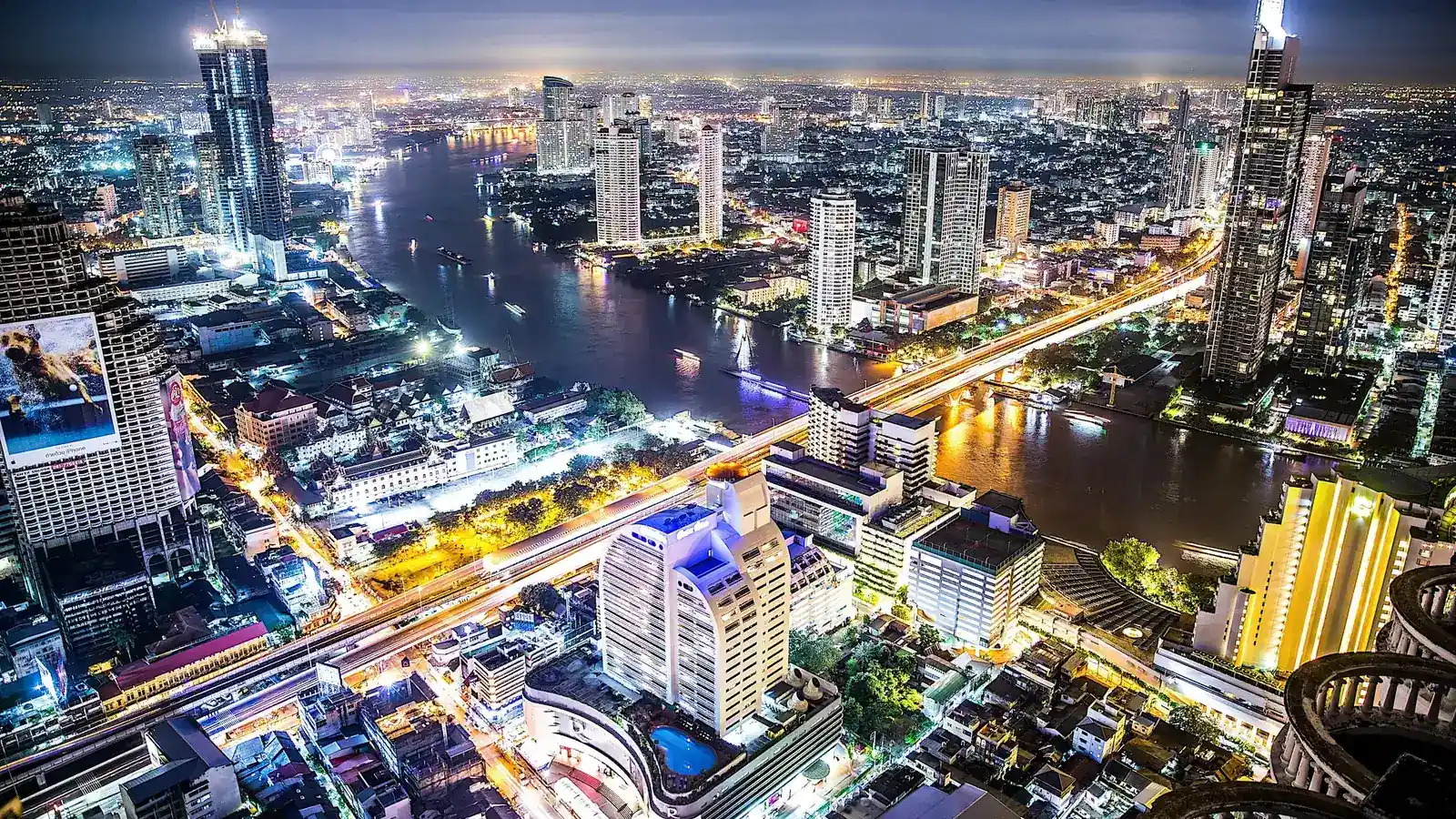
Food, shopping, culture and excellent onward connections.
Bangkok can be hot and humid, with seasonal rain. Allow indoor breaks and check forecasts; Thailand’s beach regions follow different rainfall and sea-condition patterns.
A few ways to shape your stay in Bangkok.
Choose a rail-connected neighbourhood for city exploring, with river journeys and indoor breaks between Bangkok’s busier districts.
Explore Bangkok’s food neighbourhoods and local markets, grouping nearby stops so meals leave time for wandering rather than traffic.
Compare neighbourhood markets and shopping districts, checking opening days before making a particular market the centre of your plans.
Visit Old City temples and riverside landmarks early, allowing time for respectful dress, entry arrangements and breaks from the heat.
Stay near the evening dining and nightlife you want, checking the return journey before choosing a hotel across the city.
Explore experiences and activities for your trip.
Flights to Bangkok
Choose a Bangkok neighbourhood, plan airport transfers, temple and food days, and budget for a city stay before deciding on a beach extension.
Veryaro Editorial · Suggest a correction · Affiliate disclosure
Bangkok suits travellers who want food, markets, temples, riverside experiences and an energetic city break. It can also be a useful first or final stop on a longer Thailand holiday. A city stay is not interchangeable with a beach resort: heat, traffic and travel times shape the day. Families may prefer a hotel with a pool and easy transport, while couples might value walkable dining and evening river views.
Choose two or three priorities rather than trying to cover every district in one visit. Choose a neighbourhood by how you will travel, not by the cheapest room on a map. Sukhumvit can suit visitors wanting rail access, restaurants and a modern city base, although individual streets vary greatly in walkability. Riverside accommodation can be appealing for slower stays and river excursions, but the last leg to a train station may be less convenient.
Old City sights reward early starts; staying near them does not guarantee easy access to the airport or shopping districts. For a short stopover, the cost of a hotel transfer and the journey through traffic can matter more than a small nightly saving.
Sukhumvit offers varied hotels, restaurants and access to parts of the elevated rail network, but each station area has a different feel. Silom and Sathorn suit some travellers looking for business-district convenience and dining. Riverside hotels can provide a quieter outlook, although journeys to other attractions may require a boat or road transfer. Old City locations can place major historic sights closer, with different transport trade-offs.
Check the exact street, nearest station and late-evening return journey rather than choosing on district name alone.
Bangkok is served by Suvarnabhumi and Don Mueang airports; a connection or separate ticket may use a different airport from your arrival. Confirm the airport code on every segment and allow for immigration, baggage and any inter-airport transfer. Depending on where you stay, rail, licensed taxis or a pre-arranged transfer may make sense. If travelling with a young child, ask about child restraints and luggage capacity in advance.
An arrival after a long flight is a good reason to keep the first evening simple. For four full days, reserve one for the Grand Palace and nearby temples, another for river travel and neighbourhood exploration, and a third for markets, food or a cooking experience. Leave the fourth flexible for weather, shopping or a child-friendly attraction. Temples often have dress and conduct requirements, so carry clothing that covers shoulders and knees and check the venue's current rules.
Use licensed, reputable transport and agree on arrangements before a private trip. A floating market or distant day trip can take most of a day; check the actual drive time instead of squeezing it between central Bangkok activities.
Group river and Old City sights on the same day where practical, and dress appropriately for religious sites. A food-focused day can combine a neighbourhood walk, a market and a meal rather than chasing venues across town. Choose operators carefully for canal or river excursions, and check boarding locations. Markets differ by opening hours and purpose, so verify the current schedule instead of assuming every famous market runs daily.
Build indoor breaks into hot afternoons and carry drinking water.
Rail can help avoid road congestion for journeys near stations, but not every sight has a direct connection. River boats, taxis and short walks can fill the gaps. A hotel described as central may still be inconvenient for your chosen attractions; map your most likely journeys before booking. Traffic can be unpredictable, especially around peak periods and rain. If your flight leaves early, consider whether a predictable airport transfer matters more than staying near a particular nightlife area.
Bangkok is warm for much of the year, with periods of heavier rain and intense heat; rainfall patterns differ from Thailand’s coastal regions. Do not assume a good Bangkok travel month automatically means calm seas at Phuket, Krabi or Gulf islands. For a combined trip, price the extra flight or ground journey, baggage, transfers and another hotel check-in. Budget separately for attractions, transport, meals and optional guided experiences.
Compare the cost of two well-planned bases with the fatigue of moving every few nights. Bangkok can look inexpensive in a headline hotel search but daily costs vary widely. Compare a central hotel with easy rail access against a cheaper property requiring repeated car journeys; include airport transfers, breakfasts, laundry, mobile data, attractions and restaurant choices.
If your trip continues to an island or Chiang Mai, consider whether a through-ticket or separate flights leave enough connection time and baggage allowance. Thailand's weather and disruption risks vary by region and season; Australian travellers should check Smartraveller before booking and again before departure, particularly during periods of heavy rain and flooding. A final practical check is to map the route from your airport to your hotel at the expected arrival time.
Bangkok has two major airports, and a domestic onward flight may depart from a different one, so verify airport codes rather than relying on the city name alone. Keep a modest amount of flexibility in your first day after a long flight. For families, a hotel pool, breakfast options and an easy walk to transport can be more valuable than another sightseeing stop. Check official attraction opening arrangements and current transport guidance before setting a fixed daily schedule.
Use the official visitor guides below to explore the areas and seasons mentioned here. Our suggested stays, pacing and comparisons are VERYARO editorial advice. Highlighted months are planning suggestions, not a weather forecast. Check current conditions and booking arrangements before you travel.
Let’s see where your kind of holiday could take you.